Category Archives: SQLServerPedia Syndication

Where Do I Start – The Journey?

journey

I’ve recently been approached by numerous people at work, on boards, forums, twitter, etc. regarding different ways to learn and improve one’s skill set.

The Forums

I find myself on forums more so than normal perusing through questions, providing feedback where applicable and so on. Some of the ones I traffic often are:

  1. SQL Server Central
  1. The SQL Brit’s Forum

I think forums are a great avenue to see what others are sharing on topics that I might have gone through, are going through, or will go through.

Bloggers

I enjoy reading/following bloggers of who I consider to be at “the top” of the SQL game. I will not list them all out here but if you look to the right you under DBA Blogs you will find additional links of blogs I follow. Over my decade in dealing with SQL I have tried to model and pick up some of the knowledge that they share on a regular basis. Take time to hit some of their sites and remember if you do reach out to one of them I always say be respectful; a lot of their time is providing free knowledge to the community which is what helps make the community grow and be better; be sure to thank them for all they do.

Email Subscriptions

My days normally consist of several hundred emails daily but I try to take a certain part of my day and read the emails I subscribe to; I really enjoy MSSQLTips, SWUGG, the live burn feeds I receive from the bloggers I follow, and several more. Getting involved and subscribing to some of the top tier SQL sites provides another avenue for learning opportunities, networking, etc.

Books

Really depends on what SQL Server versions you are running right now. A lot of people have been asking me about 2008 R2 and for that I liked the DBA Cookbook; felt it had some good stuff in there. Red Gate puts out a lot of good stuff along with the SQL Deep Dive editions.

Training Sites

Some ones that I’ve used or recommended in the past are:

  • Pluralsight – I’m a big Paul Randal and Glenn Berry fan so when SQLSkills.com joined it was a no brainer for me.
  • SQL Course
  • PASS (take advantage of the local chapters and virtual chapters)

Closing

I read an article this week by SQL Brit (John Sansom) regarding “Overconfidence – How it Almost Cost Me and What You Can Do to Avoid It”. After reading it I felt like it was one of the better ones I’ve read in the past month. It put things into perspective in a sense that while I’m very confident in my abilities you can never become “lax”. I am a believer in learning everyday and I will continue to hone in on my skillset; at the same time it is imperative that we do not just “assume” or “take for granted” the regular routines we do on a daily basis.

These are some of the things (not all) I like to dig into on a regular basis and I’m sure you have your own; I’d love to hear what others utilize if you have time drop me a line and I’ll share it out on the post so other community members who pass by might be able to gain something from it.


T-SQL Tuesday #38 – Standing Firm

SQL TuesdayIt seems as though months are coming and going at an alarming rate but nonetheless I can say I am enjoying the ride. Today’s T-SQL Tuesday party is hosted by Jason Brimhall (B | T) T-SQL Tuesday #38 – Standing Firm.

Jason has provided a three word topic that entails the words resolve, resolute, and resolution…given these three words one must come up with a story based on one of them.

I believe I have chosen mine and have taken a somewhat different spin on it and how I applied it to T-SQL and my DBA career.

RESOLVE

The word as some various meanings but pertaining the expression I would like to use; I will use it literally as a noun “A determination or decision; a fixed purpose”.

Many of us who are DBA’s (which I am proud to be one) have all taken various routes, various avenues if you will, along the way to get where we are at. Growing up I had a passion and desire to play the game of basketball. I would train very hard; my days would consist of waking up at 4:00 a.m. prior to school, go to the gym where I would meet my assistant coach, shoot 700 jumpers and 100 free throws, shower and go to school, practice after school with team, and then repeat the same process daily. My summers consisted of going to various camps in the United States where coaches from all over would attend with my hope of one day gaining a scholarship. I am 6′ foot tall and not overly fast I was always told that I was too small to play college and too slow. The day finally came for me to graduate and guess what ~ I made it to college to play the game I had worked so hard at for so long.

After my career was over now what? I started out in Physical Therapy but a friend of mine showed me a program he had developed. Once I saw the inner workings of what he was doing it I was intrigued and went down the path of becoming a developer to which led me into the DBA world. You know what; along those same lines I got the same rhetoric from people….”You can’t do that; you don’t know enough”; “You can’t do that; stick with sports its to long of a road for you”. Resolvea determination or decision; a fixed purpose. You see I had a fixed purpose when playing basketball. I knew what I wanted and where I wanted  to go. The same can be said with becoming a DBA or if you have a desire to learn something in T-SQL; if you  have a desire to learn something new in SQL or track down a long running query and improve it; show some resolve – have a fixed purpose. Don’t ever let anyone stand in front of your dreams to become something you want to be. It takes hard work and dedication and a drive to become not just a good DBA but an exceptional DBA.

In the end you will build a strong character and life values. What I learned on the court has carried over to my work habits. I love being part of a team, but I also enjoy when the game is on the line and SQL tasks are at hand and it is fourth quarter and systems are down I want to be the one to take the last shot.

I said all that to say this, if you are faced with “potholes” or “adversity” along your journey from a technical standpoint show some resolve. The community as a whole is here to help and don’t lose sight of your endpoint; granted that endpoint may change many times but remain purpose driven and adapt when need be.

Hosting a T-SQLTuesday Party

If you are interested in hosting a T-SQL Tuesday Party contact the founder Adam Machanic (B | T). It is a great way to get involved in the community and provide an avenue to share your ideas.


Who Do I Follow? Where Do I Go?

There are many helpful sites within the SQL Community and several more blog sites that I follow. My favorites are noted on this site; however one that keeps drawing me back time and time again is by Brent Ozar’s group. For those of you who have not had the opportunity to check the site out I’ll lay out some real world specifics on what has helped me and how I have benefited from such sites as this one.

The Webcast’s

Every Tuesday I usually find my way to their 30 minute webcast for treating pain points within SQL (among other topics). At the end of each web cast, if time permits, they will host a quick question and answer session over the topic to viewers. Check out future webcast’s here

Two Important Free Tools

There are two scripts that have seemed to help me tremendously over the course of the year. One is sp_Blitz (comes with a SSMS custom report) which a new version just came out; and the other is sp_BlitzIndex. I recently just started to use the sp_BlitzIndex but I liking this little utility while the other sp_Blitz I use when hitting new or old servers, you know the ones that you stumble upon that no one knows about and no one has a clue of what it is doing. Two great free utilities that are offered that may just save your hide one day.

Popular Topics

I like the fact that on the site they keep a section for Popular Topics that are happening within the industry; keeps me up to date and provides insight on some of the issues I experience on a daily basis. Some topics you may find:

The Team

The team makeup of Brent, Kendra, Jeremiah, and Jes makes it an easy choice for me to have in my arsenal of following. I try to find people in the industry of whom I consider for myself top in the industry and learn from them and their techniques to help better myself and further gain more knowledge.

Check it out

If you haven’t already done so go check their site out and what their about. Real people providing real solutions with some fun along the way.

T-SQL Tuesday #37: Invite To Join Me In a Month of Joins

TSQL2sdayThis month’s T-SQL Tuesday is being hosted by Sebastian Meine (blog | twitter) and his topic is anything and everything about “joins”. He’s dedicted the whole month of December to this topic.

Having had the opportunity to do extensive SQL work as a developer when first starting out I have been accustomed to joins for some time. Joins are one of the basic constructions of SQL and Databases as such – they combine records from two or more database tables into one row source. Depending on join type and join restrictions returned row count can be from 0 till all possible combinations of involved tables. Databases are built to make joins as efficient as possible. It means almost always joining data in database is more efficient than doing that somewhere else. It also means one has to know the power and possibilities of joins to fully exploit their strength.

Types of Joins

These are the most common joins that I have ran into:

  • INNER JOIN – only rows satisfying selection criteria from both joined tables are selected.
  • LEFT OUTER JOIN – rows satisfying selection criteria from both joined tables are selected as well as all remaining rows from left joined table are being kept along with Nulls instead of actual right joined table values.
  • RIGHT OUTER JOIN – rows satisfying selection criteria from both joined tables are selected as well as all remaining rows from right joined table are being kept along with Nulls instead of actual left joined table values.
  • FULL OUTER JOIN – rows satisfying selection criteria from both joined tables are selected as well as all remaining rows both from left joined table and right joined table are being kept along with Nulls instead of values from other table.
  • CROSS JOIN – A cross join performs a cartesian product on the tuples of the two sets.

Usually cross joins are used quite rarely; some of the scenarios could be as follows:

  • Possibility to generate high amount of rows. As we can see from relatively small tables there is possibility to get quite monstrous numbers.
  • Find out all possible row combinations of some tables. Mostly this is useful for reports where one needs to generate all combinations for example all nationalities x genders for persons.
  • To join a table with just one row. Most often used to get some configuration parameters.

ALIAS JOINING

Some other questions I’ve been asked over the years is proper aliasing. I’ve had people use the a,b,c, method and a short table def. for example:

Example 1

Select *

from table 1 a (nolock)

inner join table 2 b on a.id = b.id

Example 2

Select *

from customer cust (nolock)

inner join address adr on cust.id = adr.id

The Performance

I’ve seen queries astronomicaly long with nasty subselects, joins, union alls, etc. Alot of times in my query tuning and looking at poorly designed queries, stored procedures, udf’s etc it is quickly seeable whether joins are being used correctly or incorrectly. When one takes the proper time to review the database and the schema and then build the queries with powerful joins performance can be quite optimal.

Future T-SQL Tuesdays

I urge you to take the time to check out Sebastians site and hey while I’m at it if you feel like you want to host a T-SQL Tuesday give Adam Machanic a shout. I can tell you from experience that I’m glad I did. Getting involved is a great way to get going with the SQL Community and the SQL family.

Thanks Sebastian for hosting this month!

The Roundup – #TSQL2sday

Another T-SQL Tuesday has come and gone and I’ve got to admit that all the responses that were received are pretty awesome and even had a few responses from first timers that attended the PASS Summit 2012. While all the posts were great, I had one that blew me away and is exactly what the Community is about. Kendal Van Dyke allowed a post to be tied to his blog by Andy Levy who currently didn’t have a blog and is fairly new to SQL. If you get a chance check it out.

One theme that I read over and over again is that we are one huge family and we have each others backs. The Community has a whole goes out of their way to assist our fellow members. Below is the roundup from everyone who chimed in. Thanks everyone for their participation!

Remember if you are interested in hosting please contact Adam Machanic (B|T)

POSTS

Jason BrimHall – SQL Family – After Summit 2012 | SQL RNNR

Rob Farley – Rob Farley : SQL Community – stronger than ever

Aaron Bertrand – T-SQL Tuesday : Reflections on the PASS Summit and our community

Robert Davis – T-SQL Tuesday #36 – SQL Community | SQLSoldier

Chris Shaw – Esprit de Corps T-SQL Tuesday #36 « Chris Shaw’s Weblog

Valentino Vranken – BI: Beer Intelligence? · PASS Summit 2012: Impressions Of A First Timer

Steve Jones – T-SQL Tuesday #36 – What Does Community Mean? « Voice of the DBA

Oliver Asmus – T-SQL Tuesday #36 – What Does the SQL Community Mean To You? | OliverAsmus.com

Edwin Sarmiento – PASS Summit and The Value Of Building A Community

Wayne Sheffield – T-SQL Tuesday #36 – Community

Mike Fal – T-SQL Tuesday #36 (#tsql2sday) – Coolness factor | Art of the DBA

Robert Pearl – TSQL Tuesday – What SQL Community Means To Me

Tamera Clark – SQL Community and Family

Kendal Van Dyke (On Behalf of Andy Levy) – T-SQL Tuesday #36 – SQL Community (Guest Post)

Kerry Tyler – T-SQL Tuesday #36: What Does the SQL Community Mean to You (Me)?

Argenis Fernandez – T-SQL Tuesday #36 (#tsql2sday)– Post-PASS Summit Depression

SQL Asylum – T-SQL Tuesday #36 SQL Community how you can get involved

Dev Jef: – T-SQL TuesDay #36 – What does the community mean to you? « SQL from the Trenches

Mickey Stuewe – T-SQL Tuesday #36 – What Community Means to a Newbie « Mickey’s T-SQL Ponderings

David Maxwell – T-SQL Tuesday #36: What Community Means To Me | David Maxwell on SQL Server

Stacia Misner – Data Inspirations » We are (SQL) Family! (T-SQL Tuesday #36)

Jenny Salvo – T-SQL Tuesday: What Does the SQL Community Mean to You? | Salvo(z)

Microsoft SQL Server 2012 SP1 Release

I’m a little behind in getting this information out; I wish I could say it was because I was in Seattle last week for the PASS Summit 2012; however that was not the case. In any sense Microsoft has released Service Pack 1 for SQL Server 2012.

The last list of fixes I saw for what Service Pack 1 will contain can be found here

You can access the download center here

I’m interested to know how many of you in the SQL Community are utilizing SQL Server 2012 and what are some of the features you like and dislike about it. If you get time drop me a line and let me know.


PASS Summit 2012 ~ A Different View

This year’s PASS Summit of 2012 is nearing and end and while this year I was not able to attend I was able to catch a lot due to PASS TV making it’s debut.

I saw some very good sessions by many good speakers and while I wish I could have been there in person this gave me an avenue to feel like I was still a part of the Summit.

My hat goes off to the many volunteers and speakers that made this happen!!

T-SQL Tuesday #36 SQL Community / What Does the Community Mean To You?

What? Tuesday already? Is it me or is time really flying by?

Well, I’m fortunate enough this month to host Adam Machanic’s (B|T) concept of T-SQLTuesday #36. I’ve found the previous T-SQLTuesday hosts topics to be very interesting and I hope that I can do it some justice.

Over the course of the last few weeks I’ve gone through some health concerns, a World Series has taken place, Sandy has occurred up North of me, Nascar is ending it’s season, College football is ending, spoke to a group of DBA’s last weekend, attended various webex sessions, etc. One common thread that kept coming to my mind is Community, team work, team effort.

Ironically enough, this week is the PASS Summit 2012. It’s killing me not to be in attendance but I am thankful for PASSTV and for co-workers of mine who are getting to attend for the first time (5 total).

Merriam-Webster defines Community as “a unified body of individuals”. For me the SQL Community is something that has helped me in my career; whether it is questions that I’ve had along the way where I was stuck, helping other DBA’s with issues they were having, networking with other DBA’s or making contacts for the future. The SQL Community is just that; we are a team. All on the same team; if one falls we pick each other up. I’ve never been part of a group of people who want to help each other more so than the SQL Community.

One of the best conferences I’ve been to is the PASS Summit. I was fortunate enough to attend last year and this years will provide new attendees the same fortune and opportunities that I have had. Sitting and seeing some of the top DBA’s in the industry learning in sessions along with me…..yeah I was floored.

So my question today is a simple one; I had several topics to choose from technically but I’m curious as to what others think about our SQL Community. Not just some off the cuff answer but really what do you think about it and how has it helped you?

Below are some thoughts I had in creating this topic:

  • How has the community helped me in my career
  • How can I better the community
  • How can I preserve what we already have
  • How can I help other people in the community

With that said there will be some first timers and there are rules to follow:

  1. Your blog post must be published between Tuesday, November 13th 2012 00:00:00 GMT and Wednesday, November 14th 2012 00:00:00 GMT
  2. Include the T-SQL Tuesday logo (above) and hyperlink it back to this post.
  3. If you don’t see your post in trackbacks, add the link to the comments below.
  4. If you are on Twitter please tweet your blog using the #TSQL2sDay hashtag. I can be contacted there as @YatesSQL, in case you have questions or problems with comments/trackback

Many thanks again to Adam Machanic; if you’d like to host a TSQL Tuesday please give him a shout!

SSIS 2012 Style – Not So Bad After All

Okay okay, maybe DTS left a bad taste in my mouth or maybe it was because I’ve developed over 256 DTS packages and I still twitch at night. Or maybe I used the first edition of SSIS and while it was better than DTS I still wasn’t a fan; then one of my old colleagues touched base with me and told me that I needed to give the new SSIS version a shot.  He was curious about what I thought, I reluctantly held him at bay for a while but then an opportunity presented itself one day last week. A current colleague approached me with an issue where he had some .txt files that contained SQL code in them that he was running manually.

The first thing that popped in my head was giving SSIS another shot, I initially said no way not going there but figured ah what the heck – lets give it a try. Now the task at hand was quite simple really and by no means did I over complicate anything. I just wanted to take the files and load them to help my buddy out. Took me all of 8 minutes to whip a quick package up. Below is a representation of how I accomplished this; I will try to elaborate step by step.

I’m assuming that one already knows how to open SSIS in Studio…….

Step 1: Connection Managers – will need 3 of them

  1. Connection Manager (new database connection) will house the server name and database on the server
  2. SMTP Connection Manager – this pertains to the email functionality and the SMTP server
  3. File Connection Manager – empty connection for existing file that will be used in a later step

Step 2: From the toolbox I selected my “For Each Loop Container” this will allow me to loop through “all” files that I’m looking for in my specified directory. Double click the Container and or go to the properties and you will be presented with the below window. For my testing purposes I created a test folder called Test1 on my local drive. The files that I need to loop through are .txt files; in my example I am going to load all .txt files within the directory.

Step 3: From the tool box drag the Execute SQL Task over into the For Each Loop Container.

Double click on the Execute task to go to the properties section. The connection will need to be the connection from the Connection Manager that was setup in Step 1. Next the FileConnection will need to be the SQL connection set up in the Connection Manager that was established also in Step 1.

Step 4: I always set up a SMTP Connection Manager so I can utilize the send mail task from the tool box. This allows for me to communicate on failure or success to the appropriate parties. Simply drag two send mail tasks from the tool box and in the properties section add your SMTP server and how you want to connect. Click on the for each loop container and drag the arrow to your send mail tasks; to change for failure right click the arrow and select on failure.

Pretty simple in a nut shell. I felt the tools were very easy to use and while SSIS does a lot more powerful operations this solution provided a way for me to loop through my files in the designated directory, load them in without issues, and a method for notification.

Not covered in here but I will touch on is the fact that I liked the ispacs that deployment utility created. I found it much easier than using the manifest etc. All in all I was quite pleased.

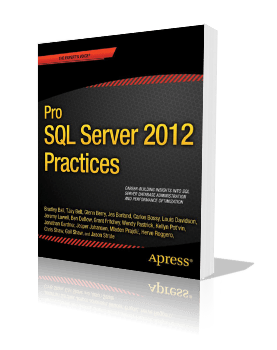
SQL Server 2012 Best Practices – The Book

 People who I have spoken with over a period of time know that I have dubbed this as “The Book“. There are several reasons why I am stoked to get my hands on a copy of this book (should be in transit to me as I type!), but one of the main reasons is I get to check out what 4 of the authors have to say of whom I follow daily from a DBA standpoint.

I am certain that all of the authors deserve kudos for their efforts in getting their respective pieces completed; for me personally I wanted to give a big shout out to Grant Fritchey, Gail Shaw, Jason Strate, and Chris Shaw. These 4 people have helped me tremendously in my career thus far by their efforts in the community and sharing their knowledge.

Looking forward to seeing what the book has to offer. I suggest you give the book a shot if you haven’t thought about it buying it yet.

You can find the book on Amazon here.