Category Archives: SQLServerPedia Syndication

Hold The Fort

stressHave you ever heard the phrase “Hold The Fort”? Long ago in battle supply routes were targeted by enemy regiments that would cut off rations to fighting units. As the battle ensued the enemy had driven back their counterparts to a small area on a hill. They were being overwhelmed with many wounded and dying; that is until in the distance they noticed reinforcements were on the way.

How many times have you, as a data professional, been stuck wondering the same thing? Battered, worn down, and flat-out exhausted until you look and see reinforcements on the horizon. Sure, we’ve all been there, but to some it is a question of how do I call in re-enforcement’s or how do I even go about sending out a help signal? Below are some various ways you can tackle problems:

Forums

There are several forums out there that can provide some great insights into similar issues that you may be experiencing. To a certain extent I think forums are a great avenue to explore potential solutions. With that said however you cannot take every answer verbatim. There can be some off the wall answers out there that shouldn’t be followed. It is important to test anything you find on the web regardless of who it comes from.

You can find some of the forums I frequently attend here.

#sqlhelp

One thing that I’ve learned about the community is the willingness to help each other out. Remember above when I stated “Hold the fort, and reinforcements are on the way”; this is a good twitter hashtag to be familiar with. Professionals from all over the world take this seriously and it is not to be mistreated on how it is utilized. I have received great assistance in the past on issues I’ve been stuck with.

Phone a friend

We all have our “go to group” we bounce ideas off of. Sometimes it is helpful to bounce ideas off of another data professional. You may surprise yourself and actually start talking through your problem and come to an answer you may not have arrived to had you not initiated the conversation.

Old Fashion Testing

As a data professional you cannot be afraid to get your hands dirty. Prove your theories and test the scenarios as you run across them. One should be doing this anyway, but in doing so a wealth of knowledge gained is at your fingertips. We stop learning when we stop trying; just because you encounter one failure doesn’t mean you stop. You keep fighting and beating down that door until you make it through the other side. How bad do you want it?

Is It A Vendor Product?

I have the opportunity to work with a plethora of vendors. Maybe your issue revolves around a vendor product and you are not able to make any changes. Great, this happens all the time to data professionals. Some questions I’ll throw out there are:

  1. Have you opened a dialogue with the vendor about the issue?
  2. Have you documented the issue; not just call and say I have a problem?
  3. Have you tried to reproduce the error?
  4. It it already a known bug?
  5. Is it something that we can address internally before we talk with the vendor?

I’ve worked with a couple great vendors in Red Gate and SentryOne over the years. As a data professional I’ve seen vendors (not all) take pride in a quick response time. If there is an issue with a product they will want to take care of it in a swift manner or provide feedback as to why, when, and what to expect.

Internal Resources

I’m going to say this here, and it may shock some of you. No one knows everything; there may be some who elude or perpetuate appearances that they know everything there is to know,  but that is not the case. Whether you are in a shop or maybe a consultant (who can tap into their contact base) there are internal methods to maybe approach a different business unit or tech unit on an issue to get an outside perspective. Sometimes a fresh set of eyes goes a long way.

Technical Blogs

There are many great technical blogs out there; I have listed some in my DBA Blogs section to the right of this page. Each person is different and has their own go to Blog for review. I receive questions all the time from readers and other data professionals; being respectful is key but I have not seen one data professional out there who would not extend a helping hand if presented in a respectful manner. DO NOT TAKE this as one will provide an answer. We may show you how to connect the dots, but it is important one takes the necessary steps to get to the answer on their own. Nothing is given….work hard for it.

User Groups

Maybe your issue is not a hot ticket item and it can wait to a user group meeting. These are great places to bring up questions and issues in a local environment with some pretty stellar professionals. I guarantee that if you ask a question and no one knows the answer then someone will do their best to find out that answer and further the discussion. An example of a user group can be found here.

PASS Summit

Perhaps your issue is ongoing and you are at the PASS Summit. Great, besides being at a conference with over 6k of our closest friends I would take advantage of the SQLCat and AzureCat Team’s hours. It is a great way to tell Microsoft of your issues and get advice from some of the top-tier people in our industry.

Conclusion

I don’t know what your situation is or will be. Obstacles will come from all angles this year; it is up to us on how we deal with them. I would be amiss if I sat here and didn’t tell you that it won’t always be easy. Nothing in life is easy; some days you will have to work and grind your way through until you get to an answer for an issue. In the end though, when you do find that answer (and you will) you will be able to learn from it and move on. It is part of a data professionals journey.

Keep fighting and keep working toward your end goals. Never stop learning; never stop gaining knowledge.

The New PASS Logo and More

pass-core-logos-for-delivery-02Change is not always easy. In fact, change is hard.

“Change” is a word from which some people shy away, and it can hinder the daily life of quite a few of us. However, change doesn’t always have to be negative.

It was only a few months ago, as I sat at the blogger’s table at PASS Summit 2016, that Denise McInerney (b|t) made the announcement of a new logo being rolled out this coming year. I will admit that I was caught off guard. Not because of the change that is coming. But simply because the existing brand is the only one I have ever known.

The “analytical” person inside me begins to wonder what the new logo represents. I am starting to get what the organization is trying to accomplish by encompassing what PASS represents and the members therein.

Change also means that not everyone will be happy. I know this firsthand. When making decisions on a daily basis that may affect various types of business, it is near impossible to please everyone. However, it is more important to look at the end game and the various umbrellas that will now fall under PASS. One example is the new event for PASS BA. The hybrid or mixture of both brands, while the old is phased out, will take some time. That much is apparent. And I agree that any new type of events that fall under the oversight of PASS should have the new branding and logo. This just makes sense from an executive standpoint.

This change in branding will represent many adjustments in the upcoming year of 2017 – websites, logos, and much more. Embracing change…it is something not always easily attained. Nevertheless, it is something that must be given much thought as we move forward.

One thing I think, and I’m looking at myself in the mirror when I say this, is that what often gets overlooked is what goes on behind the scenes to even remotely pull something like this off. It is something that should be worth mentioning that the many hours that go on behind the scenes to traverse the waters such as this should be commended.

For more information on what the Old to New branding will represent you can visit here

For a short video on how PASS has progressed you can visit here

Together We Are PASS

PASS Summit 2016 – Live Keynote

pass_2016_website

Good morning from PASS Summit 2016!

Today will be the first keynote session at 8:15 a.m. with Joseph Sirosh. I’ve found myself back at the bloggers table this year during the keynotes so check back here for updates and highlights.

In addition to these updates (plan on sending 4-5 mass live updates throughout the keynote) I will also be live tweeting with the hashtag #SQLSummit.

Have a great day and enjoy the time we have here.

T-SQL Tuesday #83: We’re still dealing with the same problems

tsql2sday-300x300It’s about time I got back into participating in the T-SQL Tuesday block parties that are hosted by community members each month. First, let’s take care of some house keeping rules.

Who Is Hosting?

This month Andy Mallon (b|t) is hosting and has chosen a topic of We’re still dealing with the same problems. This topic can have very many avenues to go down; with that said Andy….great topic sir. I suggest you stop by Andy’s blog when you get a chance; he has some great posts along with Shortcut’s Cheat Sheet that I ran across the other day.

So what are some of the same problems?

Again, we can take this path down several different roads. We can get extremely technical or we can get extremely general. For the sake of time and having you in mind as I type I may sprinkle a little of both into this post.

Professional Level

From all different levels of a database professional’s life one can see repetitive things being done:

  • Resume fluff – by this I mean interviewees having a little to much fluff on the resume that has to be weeded out.
  • Dev/DBA/Infrastructure – do I need to expound? The age old silos that are often built with blame moving to and from each unit.
  • Overworked personnel – being in management my team is key. It’s time to look at the people as that, people, and not just a number.
  • Routines – we all get stuck in a routine at times; how do we get ourselves out of so called “ruts” and light the fire that we once had?
  • Meetings – this topic can have its own blog and how to handle them. These are important in some cases and in some cases they aren’t, but the fact remains I still see a lot of shops with an endless supply of meetings.

SQL Level

Up next are the SQL scenarios I still see as ongoing battles:

  • Max Memory Setting – when installing SQL please check this setting.
  • SA – every vendor wants SA for their app; it’s how the world goes round.
  • Backups – yes I take backups….that is great news; have you ever restored any? Nope…..you see where I’m going with this.
  • Trace Flags – I see a lot of people not taking advantages of these across all SQL platforms.
  • SQL Versions – a lot of shops are not keeping up to date with their SQL versioning as often as they should.

Automation

You may ask why I put this topic in a section all by itself? I learned earlier on from John Sansom (b|t) that automation is key to becoming a successful DBA. I don’t see enough of it really? There are a lot of new tools and methods that are available to data professionals that, if taken the time, can be set up to automate a lot of the mundane tasks I see small to medium shops experiencing. Heck, even some bigger shops still struggle with the art of automation.

Professional Development

Anyone who knows me knows I like to challenge myself. Each and every person has their own set of goals and desires as they move through life and no one else can define that. I see over and over again where we tell people that they need to do this and need to do that. No, I’m not talking about mentoring or leadership. Those are separate entities; this section is meant to encourage the readers of this post that you control where you want to go in your career and not the other way around. Some knew technology comes out and you want to learn it then go for it.

What Is T-SQL Tuesday Anyway?

Well, I’m glad you asked. Adam Machanic (b|t) started this party about (I’m approximating here) 7-8 yrs ago. Each month a new blogger is chosen to host the party and they in turn get to pick the topic. If you blog about SQL and have been keeping up to date with it for a while now then drop Adam a line and let him know you are interested.

Conclusion

As you can see there are still items that occur all around us on a daily basis in the same manner. I challenge you to see, if what, can be changed. Where can you make a difference? Time to get after it ~ Let’s Roll.

Thanks Andy for taking the time out of your day to host this month.

Is ROI for Vendors Worth the SQL Saturday Investment?

networkingPiggy backing onto the recent SQL Saturday post here in Louisville, I wanted to take a more in-depth look, from my perspective, on how vendors all fit into these events.

Having the opportunity to work alongside these vendors has been both a learning experience for myself along with forming new bonds along the way. Louisville has been fortunate enough to have some of the best vendors in our industry who see the importance of investing time in others for a few reasons.

  • Networking
  • Getting their products name out
  • Growing their local community pool
  • Bringing exposure to their company

SQL Saturday events provide a much more intimate setting with a lower number of attendees. Example our event for the past two years had over 220 users sign up. This is a much smaller scale then say what a PASS conference has signed up where over five thousand of your closest friends attend.

The SQL Saturday events allow the attendees to get up close and personal with the vendors on products that they may or may not use. That’s great Chris, but I’m a vendor and how would I get ROI out of it; because at the end of the day if I want to sponsor an event there needs to be some gains on my end?

This therein is a valid question and one that is not taken lightly. In speaking with a vendor they had this to say about our event:

Our sponsorship of SQL Saturday allowed us to connect with a wealth of developers and DBAs, in a single day. The event was organized, productive, and time well spent furthering our business in Louisville.

I am starting to see soft metrics, such as intangibles, in determining the business value sending data professionals for respective vendors to such events. What kind of intangibles? They’re the stuff that doesn’t show up in traditional cost-accounting methods but that truly makes a difference in maximizing the potential knowledge growth of the organization. These include employee learning, vendor interaction, business relationships, and networking. Some of these are clearly more quantifiable than others, but all are important to a vendors success.

Some outside thoughts on how ROI for vendors is applicable:

  • You have to evaluate your audience.
  • Make sure your input channel, in this case your interaction with attendees, has some new features for viewing.
  • List of attendees for potential future clients.
  • Make your presence known prior to event (outside the marketing done by said event).
  • Commitment from potential attendees
  • Flexibility

End of the day, vendors are a huge part from all angles in regards to SQL Saturday events. Getting a great local base at events like this continues to build and solidify companies advancement in the technology space; specifically around the Microsoft stack.

Conclusion

If you are interested in getting involved you can check out or view upcoming schedules at the SQL Saturday home page here.

From personal experience I know that talking with vendors at said events it has opened doors and opportunities for business in my current and previous shops along with building a network base for future discussions.

Ten Essential Traits for DBA Success


Hard-Work_thumb.jpgThere is greatness within you whether you believe it or not. Over the years there are certain skills that have helped me along the way that, in turn, may help you along your journey. These traits are by no means written in stone and some will not agree that these are important and that’s okay; what I can say is that these traits are at the backbone of some exceptional DBAs I’ve met along the way.


Technical Traits

Backups – Think about this a moment if you will. A backup is pretty much the most fundamental aspect of database administration one could do. Let’s put this into more general terms; I view database administration as a service ( I thank Grant Fritchey (B|T) for that – Database Administration as a Service). Now, with that said whether you are new to database administration or not it is imperative to find out what the backup strategy requirements are for your business units and get your backups aligned accordingly. Let’s take this a step further and ask this question;  if you are taking good backups then are you restoring/testing these backups?

Automation Yes folks; I am a key advocate for automating as much as you can. This relates back to making database administration tasks run as efficient as possible. By doing this it will free you up to do even more types of database administration tasks. Some things to consider automating are:

  • Code Deployments
  • SSIS Deployments
  • Job tasks
  • Alerts
  • Health Checks
  • Patches
  • Server Level Changes
  • SQL Installations
  • Unit Tests

Sysadmin Rights – I think this one speaks for itself. If you don’t know who has sysadmin rights on your servers than you are doing it wrong. Find out who has this type control on your SQL Server if you haven’t already done so.

Disaster Recovery – Organizations and businesses that do not have a plan in place could fall into a few categories. The categories that I’ve seen which seem to be more prevalent, outside budget concerns, are realizing the importance but not knowing how to get there, and not knowing that a disaster recovery plan can even exist. Whatever the case may be laying out a good plan in case of disaster should be a must for any data professional.

Monitoring – This is an integral part to any DBA related job. You have to be monitoring your daily processes, policies, and procedures. Whether you are utilizing home grown coding or monitoring utilities by third party affiliates it is an absolute must that the data professional is aware of processes that may go awry before they happen; or for that matter knowing that things are going smoothly as well.

Non Technical Traits (a.k.a. Soft Skills)

Communication – One of the keys to becoming a great communicator is not becoming a great talker – big difference. These are some of the ways that can help become a better communicator where you are:

  • Earning Trust – you earn it with right acting, thinking, and ability to make decisions.
  • Become personal – I was taught early on that most of the time people really don’t care about how much you know until they discover how much you truly care.
  • Be Specific – one of the lessons learned over time is the need to be specific when communicating with a team, business unit, and executives.
  • Keep an Open Mind – want to limit a group trying to become innovative? if so then keep a closed mind. Use this as a utility to learn and grow; it’s okay if someone’s opinion is different than yours.
  • Shut-up and listen – sounds harsh I know but not really sure how else to get that point across. Becoming a great communicator you have to know when to dial it up, dial it down, and yes even dial it off. Knowledge is not always obtained by flapping your gums but rather listening and understanding situations.
  • Check Ego at the Door – over the years I’ve seen it time and time again. When you can put arrogance aside and check it at the door some great things begin to happen in shops, teams, corporations.
  • Read Between the Lines – I’m continually amazed at some of the mentors I’ve looked up to in the DBA realm and their conscious ability to read between the lines. Keep your eyes and ears open.

Listening – Just like communicating and talking I think there is as vast difference between listening and hearing. Next time you are in a conversation don’t just hear the other party but listen to them, and by listening don’t just judge but rather show you understand what is being discussed.

Work Ethic – two words have never been so important in my own life and journey. If you know me at all you know that having a strong work ethic is near and dear to me. A strong work ethic will result in respectfulness, dependability, dedication, accountability, determination, and humility. No one can do it for you; it has to be from within.

Character – can be defined as what determines how we respond to the situations and circumstances of life. One of the first jobs I had after my ball playing days was a position at a local sports store. A regional manager had made his way in and as he walked back into the back room (which I admit was not always the cleanest place due to inventory etc.) there were several pieces of paper laying in various places on the floor. Now, he didn’t know anyone was behind him but he stopped at each piece, picked it up, and threw it away. You may ask what does that have to do with character? It left an impression on me that how you work when someone is not watching you does in fact make a difference.

Do Not Compare Yourself – It is easy to get caught up in trying emulate oneself as others. Just ask Michael Jordan how many people tried to emulate him or some other renowned celebrity. I’m here today to tell you that while you can take traits from some of the best in the business; you will not be them and that’s okay. Your journey is just that; your journey – no one else’s. Own it and make it yours and along the way keep learning.

Conclusion

Focus on your greatest sphere of influence; it’s time to tear down the walls between teams, business units, and organizations. These 10 traits mentioned don’t even come close to representing any complete package of skill sets, but what it is intended for is to provoke some thought around even the basic essentials of what makes up a successful data professional.

Are SQL Saturday’s Worth It?

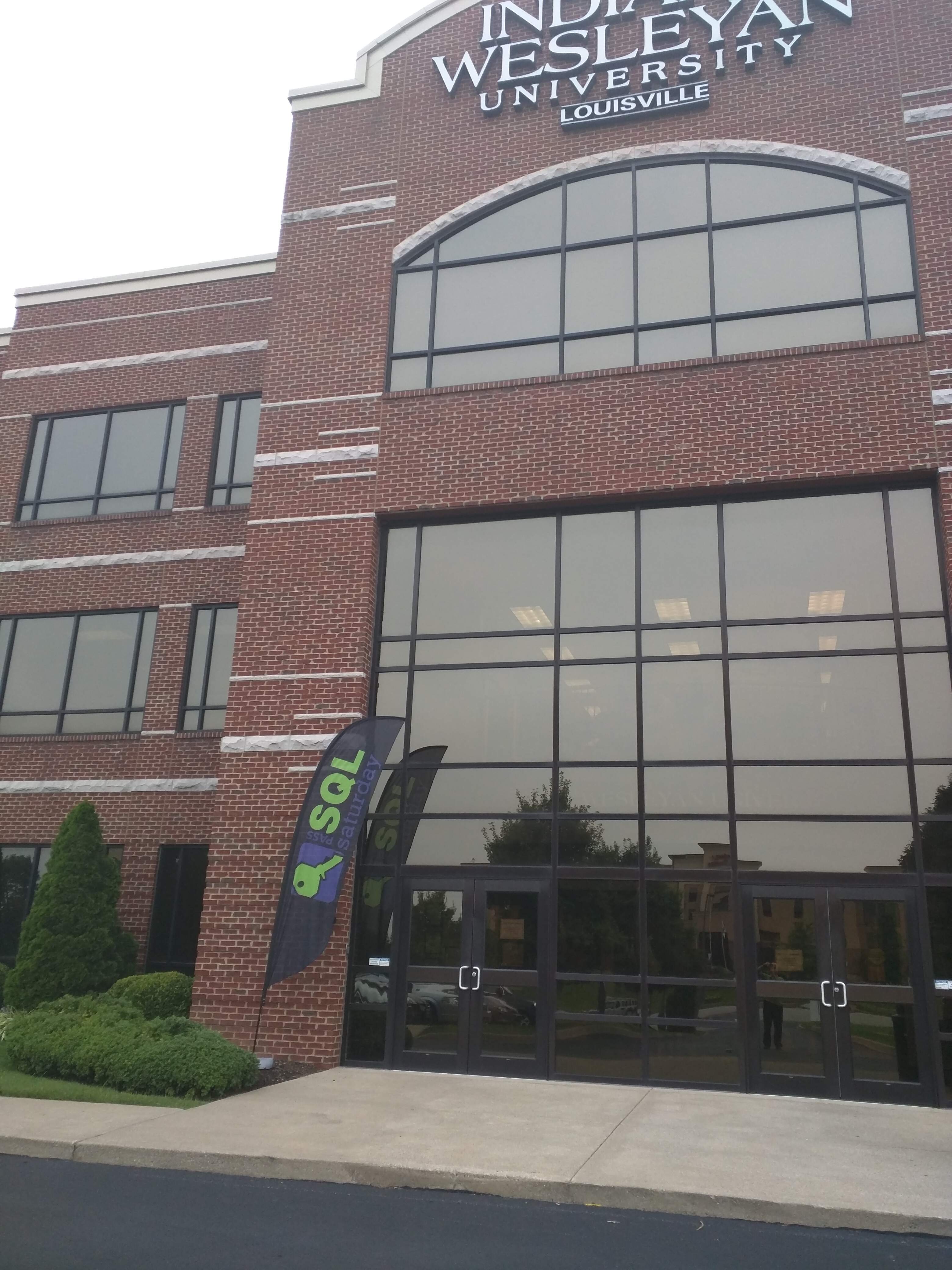
VenueThis past weekend I was fortunate enough to be a part of Louisville’s (for those local the ‘ville) SQL Saturday event held at Indiana Wesleyan. Most of you who end up on this site are probably familiar with it, but for those that aren’t familiar with SQL Saturday events you can check out their site here.

Now to put on an event like this is nothing short of an incredible effort from volunteers, sponsors, speakers, and attendees. Being able to help co-organize the one here in Louisville has been a humbling yet gratifying experience. Let me see if I can break it down a different way for you, the reader, who may not have had the opportunity yet to volunteer or attend such an event.

Volunteers

You can see these people usually with matching shirts on and a lanyard with their name and a ribbon that only says “volunteer.” In the past when I’ve attended such events I knew people helped out to put something like this on, but never in my wildest dreams did I envision all that it took until I volunteered.

Volunteering is not for glitz, glamor, or glory. Instead volunteering is what helps the cogs in the wheel move to get the steam engine running down the track. It is the staple of helping afford the opportunity for free learning to attendees and colleagues in our field.

Many, many, and many hours go into planning and organizing an event; if you attend one of these events make sure you seek a volunteer or organizer out and say thank you for their time; they are doing this for free and on their own time away from their families.

Mala Mahadevan (B|T) as a founding organizer of our event I thank you for allowing me to be a part of it these past few years.

Sponsors

Over the years, SQL Saturday Louisville has been blessed with some great sponsors. For the previous two years, John Morehouse (B|T) and I have taken great pride in working with some stellar companies. Without them, we would not be able to do what we do which is concentrate on the attendees and helping people learn.

Our Gold sponsors this year were:

Gold

  1. EMC
  2. Farm Credit Mid-America
  3. Imperva
  4. Microsoft
  5. Republic Bank
  6. Pyramid Analytics


Our Silver and Bronze sponsors this year were:

SilverBronze

  1. Idera
  2. PASS
  3. PureStorage
  4. Tek Systems
  5. Click-IT Staffing
  6. Homecare Homebase
  7. Datavail
  8. SQLSentry

A major thank you for all of their contributions and it is always a pleasure to work with all of you.

Speakers

It always amazes me at the number of speakers we have who send in sessions to our event. These speakers are people from all over the U.S. who are willing to travel and give their time so attendees can learn. Getting to spend time with each of them is not always an easy task, but always thankful to catch up with many friends at the speaker dinner.

It was awesome to see the attendees interacting with the speakers asking their questions and getting insight into the variously presented topics. And, because of so many good sessions to choose from, there was a buzz in the air.

As is the case with the volunteers mentioned above, speakers also travel on their own dime, away from their families – a simple thank you goes a long way. Also, for these sessions, I do want to point out that feedback cards are provided; please please please take a moment and make sure you provide good insightful feedback to the speakers. Each speaker uses this feedback to improve their sessions or have take-a-ways on what may or may not have worked. Yes, folks, these are important!

I won’t list every speaker we had; that is not the intent of this topic. But I will take a moment and say to each and every speaker who attended SQL Saturday Louisville 531 we thank you.

Attendees

Two words – – THE PEOPLE. As I have stated, these last two years has been nothing short of amazing. Seeing light bulbs go off with attendees who are learning from some of the best, and having discussions with attendees is why we do what we do.

When individuals come to us stating it was their first time at the event, and they had no idea that there is a local Louisville SQL User Group opens the doors to help reach people in our tech community.

Steve Jones (B|T), who is part of my Fab Five, talks about Dreaming of SQL Saturday. If you have not had a chance to read his post, check it out. Attendees travel from quite a distance. Which tells me the people are eager to learn.

Conclusion

So, the question I opened with “Is SQL Saturday Worth It?” Considering what I know now versus what I knew then the answer is yes. Personally, being a product of these types of events, I am living proof of what can grow from the SQL Community.

Whether you volunteer, speak, sponsor, or attend, all of these make the wheel turn. It’s a team effort with a lot of hard work. So, next time you attend one of these events, please don’t take them for granted.

Here is to continued learning, as we move forward to grow this community!

T-SQL Tuesday #080–Round Up

TSQL2SDAY-150x150The roundup is finally here, and cheers to all of you who participated. We had a great turnout this month with many returning participants along with some newcomers.



We had a wide range of topics with many great insights from everyone, but don’t take my word for it. Check out the links below and see what your colleagues from around the SQL Community had to say:


Jason Brimhall – SQL Server Desired Enhancements

Riley Major – The Gift that Keeps on Giving

Jon Morsi – SQL Server 2014 Service Pack 2

Melissa Connors – DBCC CloneDatabase

Aaron Bertrand – Create Or Replace

Lori Edwards – SQL Server R Services

Robert Davis – SQL Birthday Present

Allen Kinsel – SQL Server’s Birthdays

Matt Gordon – Change Always On Endpoint Ports

Bjorn Peters – My Open Points for SQL Knowledge

Chris Bell – The Gift of the Basics

Andy Yun – Give Yourself a SQL Gift

Kenneth Fisher – Default Database File Sizes

Dave Mason – SQL Server Shutdown Event

Shane Eillis – Can Powershell Get What T-SQL Cannot

Raul Gonzalez – Using the Query Store For Read Only Database

Rob Farley – Finally SSMS Will Talk To Azure SQL DW

Kennie Nybo Pontoppidan – I want DBCC ConeDatabase Available on all (supported) Versions of SQL Server

Ginger Grant – SSIS Projects, Packages, and Deployments

Mike Walsh – Happy Birthday Chris, Have Some Changes

Wayne Sheffield – SQL Gifts

As you can see we had a great turnout and everyone continues to share their knowledge daily, weekly, and monthly basis. Thank you again for all who participated, and a big thank you to Adam Machanic (B|T) for allowing me to host another block party. Hope you all have a good one and look forward to next month.

images

T-SQL Tuesday #080

TSQL2SDAY-150x150T-SQL Tuesday time is here again! And I’m honored to be hosting this months block party. Why you ask? T-SQL Tuesday #80 happens to fall on my birthday believe it or not!

With that said let’s get this party started and have some fun with it this month shall we. Treat yourself to a birthday gift and come up with a present for yourself SQL related – no limitations:

  • Is there something you’ve been wanting to do for a long time in SQL, but haven’t done it yet?
  • Perhaps there is a feature you would like to see added into SQL that just isn’t there yet – what is it?
  • Maybe you are a consultant and know something many of us don’t as you parachute in and out of shops that a reader can benefit from?
  • Is there a co-worker struggling with something SQL related; here is your chance to share the present (knowledge).

Gift wrap your post for yourself and be innovative with what you write about.

images

Some Ground Rules Apply

The post must go live on your blog between 00:00 GMT Tuesday, July  12, 2016 and 00:00 GMT Wednesday, July 13, 2016.

Link your post back to this post and make sure you include the T-SQL Tuesday logo in your post.

Leave a comment here in case that ping back doesn’t quite work out I’ll still be able to find you. Once all the posts are submitted I’ll circle back around and publish a roundup. Enjoy this one and have some fun with it. Be creative; after all….it’s your gift.

Get after it; Let’s Roll

Yates

Is Today Your Last Day Working With SQL?

Please entertain this thought for a moment – If today was your last day working with SQL how would you spend it?

Now, this post is assuming you, as the reader, are working with SQL in some form or fashion; however take the question and apply it to some other form of technology if that fancies you.

I started thinking about this question not long ago. It got me to ponder (as my friend Tom Roush (B|T) would say ) a bit . If I woke up one morning knowing it was my last day as a data professional to work with the SQL platform how would I spend it?

Would those arguments with developers that have been encountered through the years be at the forefront, or maybe it is the conversation with my storage administrator on how much is being consumed.

Perhaps it is taking that extra moment to answer someone’s question instead of ignoring them due to “priorities” that need to have some form of completion.

As I type this I have my PASS Summit 2015 credentials in front of me and I am reading words such as “community zone” and “community appreciation party”. Have I done enough to help better this SQL community?

Answer to all those questions is – I don’t know.

I tackle each day as a new opportunity to impact something or someone. Whether it is in the shop, with some form of technology, a family member, or a friend – I think what has put some things in perspective for me here lately are life events.

My dedication to SQL and the community that I so richly am blessed to be a part of has not and will not waver – I’m just a data professional looking at a question that I really am not sure I can answer at this point in time.

Have you ever poured your heart and soul into something – yes many of you have and will continue to do so as will I.

I see posts on topics such as “What will I tell my future self” and “Someday”; those types of posts are starting to hit home to me. For me, everyone is different, but I do feel it is important to tackle each day as a new beginning.

Things can change in a heart beat; we work with some pretty awesome technology but even more so some pretty talented data professionals – don’t take that for granted. There will be a day and a time to hang it up and when that time comes, I hope I can look back and say with 100% certainty that I gave all I had, left it all out on the field, and that I have nothing left in me.

  • Continue to learn
  • Continue to make an impact
  • Continue to fight when you feel like fighting no more
  • Continue to be the best you can be; that means be the best you that you can be.

So, I ask you – If today was your last day working with SQL how would you spend it?