Tag Archives: SQL Community

Why Data Silos Hurt Your Business Performance

Let’s be honest – data is the backbone of modern business success. It is the fuel that drives smart decisions, sharp strategies, and competitive edge. But there is a hidden problem quietly draining productivity: data silos.

What is the Big Deal with Data Silos?

Picture this – you have teams working hard, digging into reports, analyzing trends. But instead of sharing one centralized source of truth, each department has its own stash of data, tucked away in systems that do not talk to each other. Sound familiar? This disconnect kills efficiency, stifles collaboration, and makes decision-making way harder than it should be.

How Data Silos Wreck Productivity

Blurry Vision = Ineffective Decisions Leadership decisions based on incomplete data lead to assumptions rather than informed facts.

Wasted Time & Redundant Work
Imagine multiple teams unknowingly running the same analysis or recreating reports that already exist elsewhere. It is like solving a puzzle with missing pieces – frustrating and unnecessary.

Slower Processes = Missed Opportunities
When data is not easily accessible, workflows drag, response times lag, and the business loses agility. In fast-moving industries, those delays can mean lost revenue or stalled innovation.

Inconsistent Customer Data = Poor Experiences
When sales, marketing, business units, and support teams are not working off the same customer data, you get mixed messages, off-target campaigns, and frustrated customers.

Breaking Free from Data Silos

To break free from stagnation, proactive action is essential:

Integrate Systems – Invest in solutions that connect data across departments effortlessly.
Encourage Collaboration – Get teams talking, sharing insights, and working toward common goals.
Leverage Cloud-Based Platforms – Make real-time access to critical data a priority.
Standardize Data Practices – Guarantee accuracy and consistency with company-wide data policies.

Data silos are not obvious at first, but their impact is massive. Fixing them is not just about technology, it is about a smarter, more connected way of working. When businesses focus on integration and accessibility, they unlock real efficiency and stay ahead of the game.

Unlocking Real-Time Financial Insights: The Power of Microsoft Fabric

Microsoft Fabric is transforming real-time analytics for financial institutions. It provides a unified data platform. This platform integrates various data sources into a single, cohesive system. This integration breaks down data silos. It enhances decision-making and customer insights. Fabric’s real-time intelligence capabilities allow financial institutions to extract insights from data as it flows. This enables immediate decision-making. It supports critical functions like fraud detection, risk management, and market trend analysis.

With AI embedded throughout the Fabric stack, routine tasks are automated. Valuable insights are generated quickly. This boosts productivity and keeps organizations ahead of industry trends. Additionally, Fabric ensures data quality, compliance, and security. These elements are crucial for handling sensitive financial information. They also help in adhering to regulatory requirements. The architecture is scalable to support the needs of financial institutions. They are dealing with gigabytes or petabytes of data. It integrates data from various databases and cloud platforms. This creates a coherent data ecosystem.

Real-time analytics allow financial institutions to respond swiftly to market changes, making informed decisions that drive competitive advantage. By adopting Fabric, financial institutions can unlock new data-driven capabilities that drive innovation and keep a competitive edge.

Moreover, Microsoft Fabric’s ability to deliver real-time analytics is particularly beneficial for fraud detection and prevention. Financial institutions can track transactions as they occur, identifying suspicious activities and potential fraud in real-time. This proactive approach not only protects the institution but also enhances customer trust and satisfaction. The speed of real-time analytics allows immediate addressing of potential threats, reducing the risk of financial loss and reputational damage.

Besides fraud detection, real-time analytics powered by Fabric can significantly improve risk management. Financial institutions can continuously assess and manage risks by analyzing market trends, customer behavior, and other relevant data in real-time. This dynamic risk management approach allows institutions to make informed decisions quickly, mitigating potential risks before they escalate. The ability to respond to changing market conditions is a critical advantage. Addressing emerging risks in real-time is vital in the highly volatile financial sector.

Furthermore, the integration of AI within Microsoft Fabric enhances the predictive analytics capabilities of financial institutions. By leveraging machine learning algorithms, institutions can forecast market trends, customer needs, and potential risks with greater accuracy. This foresight enables financial institutions to develop more effective strategies, improve their operations, and deliver personalized services to their customers. The predictive power of AI is significant. It, joined with real-time data processing, helps financial institutions stay ahead of the competition. They also meet the evolving demands of the market.

Microsoft Fabric’s technical architecture is designed to support complex data operations seamlessly. The integration structures like Data Engineering, Data Factory, Data Science, Real-Time Intelligence, Data Warehouse, and Databases into a cohesive stack. OneLake, Fabric’s unified data lake, centralizes data storage and simplifies data management and access. This integration eliminates the need for manual data handling, allowing financial institutions to focus on deriving insights from their data.

Fabric also leverages Azure AI Foundry for advanced AI capabilities. It utilizes machine learning efficiently. This enables financial institutions to build and deploy AI models seamlessly. This enhances their predictive analytics and decision-making processes. The AI-driven features, like Copilot support, offer intelligent suggestions and automate tasks, further boosting productivity. Additionally, Fabric’s robust data governance framework, powered by Purview, ensures compliance with regulatory standards. It centralizes data discovery and administration. It governs by automatically applying permissions and inheriting data sensitivity labels across all items in the suite. This seamless integration ensures data integrity and transparency, essential for building trust with customers and regulators.

Lastly, Fabric’s scalability is a key technical advantage. It supports on-demand resizing, managed private endpoints, and integration with ARM APIs and Terraform. This ensures that financial institutions can scale their operations efficiently. They can adapt to changing business requirements without compromising performance or security.

Long-term, Fabric will play a crucial role in the future of data analytics. It offers a unified platform that seamlessly integrates various data sources, enabling more efficient and insightful analysis. It handles large-scale data with high performance and reliability. This ability makes it indispensable for driving innovation. It also supports informed decision-making in the analytics landscape.

PASS Data Community Summit: A Personal Journey

PASSDataCommunitySummit

As someone attending the event since 2011, I would like to share my personal experience, the value of attending, and how the event has helped me throughout my career.

For decades, the PASS Data Community Summit has supported the data community, and the event itself has been going strong for more than 25 years. Looking back on my experiences, I never realized the ebb and flow the journey would take me on, but the value of attending the conference quickly became evident to me. Each year, I have gleaned new ways to improve technology, data footprints, and beyond learning from expert speakers and industry leaders.

I can still recall sitting in a session led by Chris Shaw around a DBA Maintenance database or John Sterrett’s Policy-Based Management session. The memories of those first few years were eye-opening. It quickly became evident to me that the quiet moments in between sessions were just as important (some call this the ‘Hallway Track’). Each year, I can pick out crucial conversations that happened in between sessions that left a lasting impression. You see, while this is a technology conference put on by some stellar people, it’s just that, the people and relationships built.

My journey has run the full gamut of being an attendee, volunteer, speaker, and past board member, and what I’ve found and learned through it all was that the amount of learning has been off the charts, but the people I’ve met along the way have made the journey something special.

PASS Data Community Summit brought something special that I was searching for at the time, a place where I could hone my skill set, but it became much more. I vividly remember running into an issue at work one day and being able to pick up the phone and call an expert in the field because of the friendship made at PASS Summit to get their opinion.

When you walk through the halls and see all of the people, I can remember being overwhelmed that first year, now, these years later I don’t take it for granted when I look out and see the sea of people, and I can’t help but think there are still more Chris Yates’ out there looking for something. Each year I go back and have the opportunity to speak with more folks, and I’m appreciative to have folks come up and want to talk either about a session I’ve done, spoke at, blogged about, or helped with along the way.

PASS Data Community Summit has been an incredible journey for me, both professionally and personally. The event has provided me with invaluable learning opportunities, but more importantly, it has given me the chance to build lasting relationships with some amazing people in the industry. So, on that note, I’ll see you at the PASS Data Community Summit this year and for many more to come!

The Power of User Groups

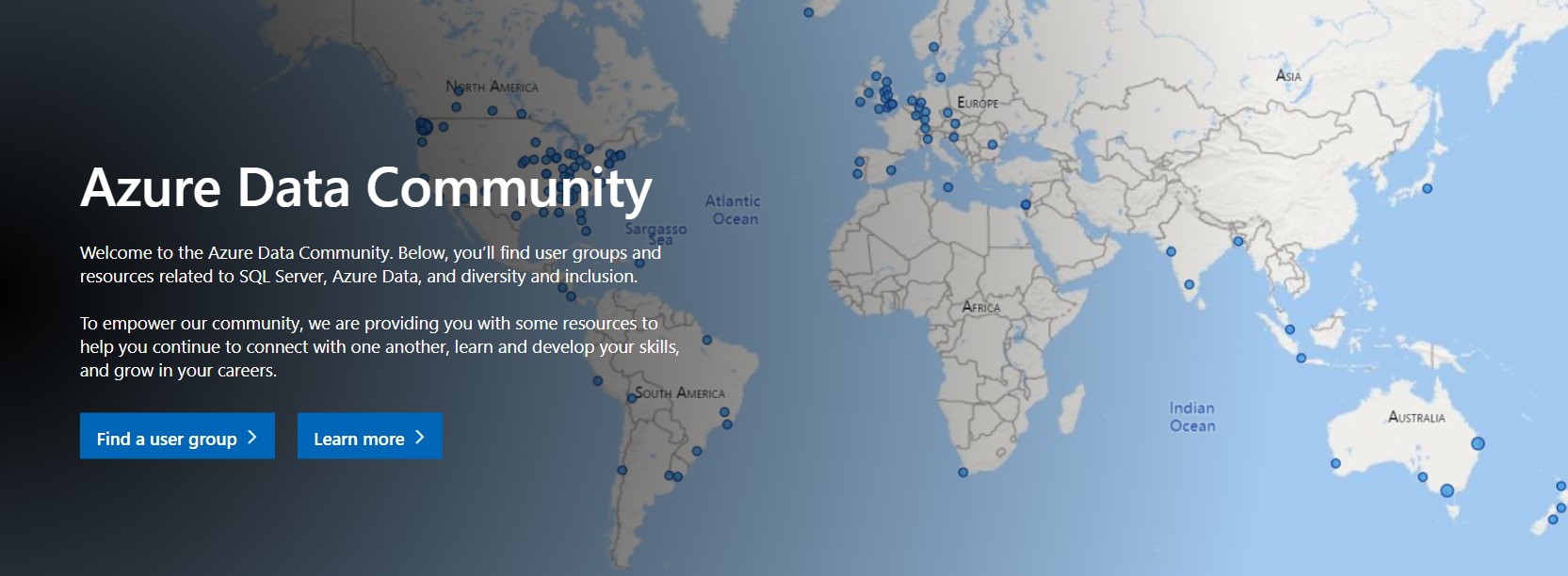
AzureDataCommunity

Fascination has always been with me when thinking of developing local talent. It has helped me immensely in my career both as an attendee, presenter, chapter leader, and more. One can glean immense value from becoming involved in a local UG (user group), whether by the connections made in networking, friendships formed, or learning something new that can help you on your journey.

This post isn’t one to talk about the past and looking at the rearview mirror, but seeing something tremendous and looking through the windshield. That phrase was told to me recently by a mentor, and it stuck with me. For those that aren’t aware, Microsoft has done a great job at intertwining a global network for user groups to come together and share knowledge to further impact communities.

Helpful Links:

  1. Can submit your group here – https://t.co/IzONhUQqel?amp=1
  2. Can submit your event here – https://t.co/0cE0sA5rbF?amp=1
  3. Find a user group on meetup – https://t.co/uRBu6utV5N?amp=1
  4. Upcoming community event list – https://t.co/IzONhUQqel?amp=1
  5. FAQ’s for the Azure Data Community – Azure Data Community FAQs – Microsoft Tech Community

This statement provides an in depth belief of what is starting to transcend community events globally in this arena:

We are Community Owned, Microsoft Empowered. Group leaders own their group, membership lists, content, etc. In that way we aren’t a governing umbrella organization. We’re a network of user groups with a common goal.

The Azure Data Community will continue to grow worldwide, and I challenge you to become involved in your local area. I’ve been fortunate enough to be in leadership at a local level and a global level in years past; nothing is more rewarding to see and help others continue to grow on their journey.

Interview with Warwick Rudd


Leadership-2

Part of traveling to various events and being a part of the SQL Community means one can meet some pretty awesome professionals. I was fortunate enough to run into Warwick Rudd (B|T) at one of the PASS Summit events held in Seattle, and he definitely lives up to all the hype.

Warwick is a SQL Server MVP, Microsoft Certified Master – SQL 2008, MCT, Founder and Principal Consultant at SQL Masters Consulting. He’s definitely an avid blogger, talented speaker, and a leader in our SQL Community.

After PASS Summit 2015 we kicked an idea around about getting something like this going where we could share a few questions and answers; the timing finally aligned right and well, without further ado:

  • How did  you get your start in working with SQL Server?

I was working as a UNIX scripting developer on an in house created scripting language. The company had a couple of web developers who had installed SQL Server 6.5 and the company needed someone to look after the SQL server environment. I moved in with the oracle DBA’s as there were no SQL server DBA’s and my first training course was delivered by Greg Low. Look where things have led me to now?

  • If there was another occupation you could see yourself doing what would it be and why?

Physiotherapy – I have played  a lot of sports and some to a very high level. Sports and sports remediation I find interesting and just naturally enjoy learning about it.

  • Being in technology we do play some pranks on our fellow colleagues. What is one that you are willing to share, that you have done in your past?

I was working in a bank and at the time we actually did not have pc’s but dumb terminals. We disconnected the keyboard and put sticky tape over the connection before seating the connection back just enough to make it look as though it was plugged in to pass initial inspection of why the keyboard was not working.

  • Where is one place that you would love to speak at someday (conference, SQL Saturday, event, etc.)?

Ha-ha this is a tough one as there are so many different things to take into consideration. But I guess I would love to speak at SQL Saturday in Colorado if it was ever available in winter as I love being in the snow and snowboarding – I would then get to do 2 things I enjoy. There are some bigger events, if I ever got the opportunity to speak at, that would be so humbling to be selected for, but I will keep those close to my chest so as to not jinx myself 🙂

  • For those out there that have not heard of SQL Community, what would you say in 3 words describes SQL Community?

Friendly, Supportive, Intelligent

Big thanks to Warwick for allowing us to take a glimpse into some of his thoughts. If you are ever at an event make sure you stop by and say hi to him; just a stellar individual.

The Next Chapter ~ A SQL Journey


Journey

The past five years have been nothing short of an amazing ride on this thing we call “The SQL Journey”. I never cease to be amazed by the many outstanding data professionals we have in the PASS community.

For me, this ride has been a great learning experience. In addition, I am very thankful for the sacrifice of time that Chris Shaw (B|T) made in my behalf so many years ago. He was kind enough to take a willingly motivated individual under his wing and show him the ropes. He could have very easily said that he didn’t have the time. But the willingness that he expressed epitomizes what I have come to appreciate and expect from the SQL Family.

Along this journey I’ve witnessed a “closeness” rarely experienced in other communities.

A group rallies around someone in need, searching for an answer to their problems.

Fund raisers are organized for causes that benefit the individuals.

Intimate conversations are encouraged between peers – especially at large events and major conferences.

Words of experience and wisdom are freely exchanged when real-world battles make the road difficult.

These continual acts of kindness and sacrifice often leave me in awe.

It is not a perfect journey. It is not always an easy journey. And I have yet to see a bed of roses along the way. But my, oh my, it can be a rewarding journey.  The fruits of knowledge, friendship, bridging of gaps, experience, and opportunities are priceless.

Given my current position at “the shop”, leadership has been on my mind a lot lately.  Along with having aspirations in the SQL community, these are some important traits that I hold close to the heart:

  • Authenticity
  • Integrity
  • Concern
  • Restraint
  • Humility

At the same time, I strive to gain and exhibit:

  • Confidence
  • Vision
  • Composure
  • Resonance
  • Practical Wisdom

With these things in mind, I am today pleased to announce that I, along with my good friend John Morehouse (B|T), will be serving as Co-Chapter Leads for the Louisville SQL User Group. John and I were introduced to each other by Chris Shaw, and his influence has been tightly intertwined with our respective journeys since their beginnings. Little did I know, after a simple handshake at a PASS Summit, John would someday move to Louisville and a new friendship be forged. I will go to battle with John on any day, at any time, and anywhere, and I look forward to what the future will hold.

I do appreciate all of the hard work that Dave Fackler (B|T) has put into this community. While he is a stellar data professional in his own right, he has also helped to provide us locally with an avenue of opportunity and growth. Ideals to which he has been dedicated. It is my primary desire to help cultivate our local user base. To bringing forth new leaders, new innovators, and new SQL family members.

For those that know me, I have a reputation for using this saying … “Let’s roll.”

So, without further ado…Let’s roll.

Time Management–Leadership

TimeLeadershipTo many times data professionals flounder in what some call a pool of uncertainty. The countless tasks, tickets, projects, and emails that may flow in without prioritizing will leave individuals searching for what is needed to be worked on now.

Organize or Agonize

Face it, we all influence someone. Whether you are a sole DBA out in the field or a leader of many there will be times when one will have some form of influence. There will be times when a data professional needs to juggle a multitude of tasks; being a leader in this area is key – either you organize or you will agonize over what all has to be done.

Here are some tips in how to organize and become better at time management:

  • High Importance / High Urgency – tackle these projects first
  • High Importance / Low Urgency – set deadlines around completion dates and work these into your daily routine
  • Low Importance / High Urgency – find quick and efficient ways to get this work completed without much personal involvement
  • Low Importance / Low Urgency – this is busy or repetitive work (think about automation if possible)

Too Many Priorities Can Paralyze You

The papers on the task keep growing, emails keep coming in, automated jobs are failing, on call is ringing off the hook, and you suddenly get that “frozen feeling” of what in the world am I going to do? If you’ve been in this business long enough than you know what I am talking about. If you are feeling this way go ahead and get the tasks organized then approach your boss about how best to approach them and what their advice may be. True leaders want to help their employees as much as they can and this is one of the areas that all of us can work on. All good leaders have learned to say no to the good and yes to the best, and one of the keys to success is keeping that line of communication open with your boss.

Monica Rathbun (B|T) has a great post on The Shield. I suggest after you finish reading this post you go check hers out; a superb written post that provides insight into a lone DBA’s world.

Leader or Follower

A person is either an initiator or a reactor when it comes to planning. In my past dealings I’ve found that these hold true; note the difference:

Reactors

  • React
  • Listen and wait for the phone to ring
  • Spend time living day-to-day reacting to issues
  • Fill the calendar by requests
  • Spend time with people

Leaders

  • Initiate
  • Lead; pick up the phone and make contact with people
  • Spend time planning and anticipate problems
  • Invest time with people
  • Fill their calendar by priorities

Often times we see that when people lack ownership of an idea, they usually are hesitant to change. It affects routine, causes a disruption, and at times creates fear of the unknown. Uncharted territories cause insecurities to rise; four important cycles that will stand out around effective change are create, conserve, criticize, and change.

As a data professional there will be times when you are faced with bringing about change; here is a checklist that you may be able to garner some ideas from and assist you in helping you to bring forth implementing or requesting changes.

  • Will this change benefit others?
  • Is this change compatible with the purpose of the organization?
  • Is this change specific and clear?
  • Is it possible to test this change before making a total commitment to it?
  • Are physical, financial, and human resources available to make this change (what else is on the plate?)
  • Is this change reversible?
  • Is this change the next obvious step?
  • Does this change have both short and long-term benefits?
  • Is the leadership capable of bringing about this change?
  • Is the timing right?

The wrong decision at the wrong time = disaster

The wrong decision as the right time = mistake

The right decision at the wrong time = unacceptable

The right decision at the right time = success

Closing Thoughts

The above are methods that I’ve picked up over the years that have helped me not only become a better data professional, but a leader. I’ll leave you with a few insights into what a solid foundation could be built on; it will be up to you to become the leader that you want to be; along with honing in your time management skills.

The definition of leadership is influence.

The key to leadership is priorities.

The most important part of leadership is integrity.

The most ultimate test of leadership is creating positive change.

An extra plus in leadership is attitude.

What is your most appreciable asset – people.

The indispensable quality of leadership is vision.

The price tag of leadership is self-discipline.

May we never lose sight or focus of our dreams and goals. Obstacles will occur, but they are just that obstacles with solutions waiting to be had. Take the hard knocks as lessons that can be learned. There will be many, life’s journey is full of them – what kind of impact will you have?

Reflections and Looking Forward

ScoreboardTime is slowly ticking toward 0:00 on the clock. As I look around I couldn’t help but reflect back on the game – the game being 2015. Did I give it my all? Did I leave everything out on the court, and lay it all on the line? Sadly, I’m sure I could have done more – – I took some plays off where I needed to dig deep and give it all I had.

With just a few more days left in the year 2015; the coach is drawing up one final play. I, you, we have to finish strong; it is what defines us; it is character; it is leadership; it is seeing things through and finishing strong.

We’ve done some great things this year; nothing can take those things away nor negate the fact that we gave it, in our minds, all we could. So as people approach me and ask me what are my plans for 2016; I don’t know what the future will hold. Some of my thoughts though…..

Failing

That’s an odd word and sometimes one that we don’t’ associate well with. I expect to fail; if I do not then it means I am not trying; I’m not trying to be innovative and test the boundaries. Embracing the struggles that one goes through helps with the learning process of our job. It defines us; failing forward – don’t be scared and run from it – embrace it.

Failing is not in our nature; it is not something we like. It is however an aspect of growth. Keep moving forward, take the hit, learn from it, own it, and move on.

There will be times in your life when you are kicked down and you feel like you don’t want to keep going with figuring out the issue at hand;  the weight of the world is on your shoulders and it is up to you to get it done…..this is when you find the way and you dig deep to find something within you to keep pushing forward. I, we, you eventually will get through the test of the will and grit – mental toughness if you will.

Motivation

Pain is temporary, I heard this over and over again when training in sports. Keep moving one foot in front of the other; you have to work through it. Is it something new you are tasked with to learn? Is it a company directive that is “impossible” to get through? We’ve all been there; even the great ones in the industry. The difference is, in a lot of people, the great ones don’t quit. Anyone can be good when times are good; will you show up when times are bad? Will you show up when those tough times come up – – two words “Bring It”

The Past

It takes courage to let things go; 2015 will be in the past soon. 2016 will be in front of us; what is in front of you is greater than what was behind. It will be up to you to make it yours….

Do you want to embrace your destiny or flutter on the ground in your history? The new year represents new beginnings; if you want to learn something new within the industry then set your sites and – Let’s roll.

Don’t be distracted on what used to be or what could be…..if you do that then everything that is will slip by you. Everyday when you wake up you can go pursue that piece of technology that you want to learn.

Investment

I remember the sprints I used to run in the middle of the street at 3:30 a.m.

I remember the 1000 jump shots I would take in the morning before school.

I remember the countless hours of training off hours from practice that were put in.

I remember people holding brooms up in the air as I took shot after shot to get that arch down right when shooting over a 7’ tall player.

All that work; all that planning – it has made me realized that the same investment in yourself has to be done as a data professional. Each one of us are designed to be who we are; not like everyone else. I have a ton of people I look up to in our SQL industry – John Sansom, John Sterrett, Jes Borland, Aaron Bertrand, Tim Radney, Brent Ozar, Steven Jones, Grant Fritchey, Erin Stellato, Chris Shaw, and many more that I cannot name as it would fill this whole post up…As much as I look up to these people I cannot be them. They are each their own person and I am me; what I can do is put forth and effort and continue to learn just as they have. I can be the best that I can be; same for you.

That mountain you are trying to climb right now in learning? We’ve all been there; it’s part of growth and I’m here today to say you can do it; just keep putting one foot in front of the other – that is action and that is progress.

So 2016; what about it?

Heading into 2016 I can only say that I will give you my all, give you everything I can, and at the end of the game I can look each of my SQL team members in the face and say – I gave you all I had; have nothing left in the tank to give.

When the lights are off and the game has been played continued work will still be being done. Putting the time in; putting in the effort to be the best SQL Data professional that I can be in 2016. Some of the following are areas am working in:

  • Speaking at different events
  • Continued article, blogging, and case study writing
  • Mentoring
  • Leading
  • Certifications
  • Vendor programs and feedback
  • Virtual Chapters

So I ask you; what will you do in 2016? Finish the game strong; leave it on the court and make today better than yesterday – Let’s roll


Community Involvement–Why Wait?

PleaseWaitEveryone has a story; some stories are similar while some stories are vastly different. People always make the statement that you shouldn’t “assume” because if you do….well then you know what happens!

I will go out on a limb and gather to say that many fall into the category I did when it comes to the SQL community. From the years 2000-2010 I had no clue that the SQL community existed yet alone any conferences. It was when I was hired on at my current shop did I learn of this thing they called PASS Summit.

From 2011- to present I can honestly say it has been one heck of a ride. A lot has transpired over the course of soon to be 5 years and I’m thankful for it; I wouldn’t change a thing. I look back at those first 10 years and I was floundering – man o man was I floundering. What that time means to me now though is a light into the future and to know where, as a data professional, a direction I want to go in.

I’m starting to get asked more and more the question of “What can I do to get involved within the SQL community?” or “I’m not good enough to get involved”.

My answer to that is simple, let’s roll. Below are five avenues in which you can get started with community involvement. All they require are you; yes that’s right you to take the initiative and get involved.

Blogging

I can tell you that blogging was not an easy thing for me to get started on but has been well worth it. I’m not the most talented writer; nor am I one of the most captivating individuals you will ever meet. What I do feel that I can bring to the table is real world life examples that have helped me along my way in my SQL journey, and guess what – you can be the same. Some things to keep in mind when starting out to blog are:

1. Don’t beat yourself up if you start to write, but have mental blocks.

2. Get a few blog posts in the pipeline and scheduled to help get your feet wet.

3. Find a good platform; there are several out there such as WordPress.

4. If writing examples; then prove your examples. Don’t just write to be writing. Have a point prepared.

5. If you reference someone’s work then give credit where credit is due. This is a huge pet peeve of mine.

Social Media

In this day and age it is almost impossible to not be connected through some form of social media. You can find many groups, hash tags, companies to follow, and other viable sources to become involved with. Some different types are:

1. Twitter – pay attention to hash tags such as #sqlfamily, #sqlserver, #tsql2sday, #sqlhelp

2. LinkedIn

3. Facebook

4. Instagram

One caveat I want to add here is be professional; companies do look at your involvement.

PASS Active Member

Become an active member in PASS; it doesn’t cost you anything and can provide various forms of volunteering. This type of involvement has changed my career allowing me to see on a more global scale of how impactful our SQL community can be.

Learn more about the PASS Summit here.

SQL Saturday Events

These events are free. Let me ask you this; does your company not want to provide you with any training; or better yet maybe they do and just don’t know how. These events are free except for lunches and has some very talented speakers that attend. Take advantage of these; you can get a current listing on my blog here or go visit SQL Saturday’s home page here for further information.

Mentor

Maybe you have been in the community for a while and it has become stale. One idea would be to mentor someone; doesn’t have to be someone in a different state; how about someone you work with that is needing help. Do you remember when you started out? I sure do and I would have loved to have some guidance and help earlier on in my career. Five years ago I was fortunate to learn and model some of my ways from a group I called my “fab five” – give them a read here; truly thankful for these individuals.

Mentoring someone ignites the passion to keep those knowledge juices flowing; each one reach one effect.

Recap

I’ve come to learn through my 5 years of involvement with the SQL community that it is not always a bed of roses and flying unicorns but SQL family is composed of not only some of the brightest minds in the business but also individuals who care for one another and who genuinely step in and help when needed.

So I ask you, why wait? How many years will you let go by like I did before you become involved? There has not been one day where I have regretted becoming involved within the SQL community and if you would like to talk more about how to get started let me know. I will be happy to discuss with you offline if need be.

It’s GameTime folks; Let’s roll and keep this community moving forward.

Impact Player Series – Part 1

ImpactI wanted to start this series in regards to impact players that go above and beyond in the SQL Community. Coming from a sports background this resonates well with me and by the end of the year will have a 12 person roster.

I get asked a lot when I go to events, conferences, talks, groups who inspires me. Or I get asked where do I start. There are many fine folks in the SQL Community and I cannot encompass them all; believe me this 12 person team could easily become much more.

So, who the heck is the first impact player? Being that I am from Kentucky it pains me just a little to write this knowing that this person is an SEC rival (college sports) and is a true orange fan in Florida ~ Ed Watson (B|T).

Ed is a Microsoft SQL Server MVP who I have gotten to know over the past year. His tenacity alone has spoke volumes in how he approaches speaking engagements, obstacles, issues, SQL life, basically the things that make up a data professionals life. I would classify Ed as one of those exceptional data professionals that you hear about. If you not ever had the chance to hear him speak at an event I suggest that you keep your ears open and if he comes to a town near you attend ~ you would not be disappointed.

I’ve never one time have come to Ed and him tell me not today; he is always eager to assist and help and has been a strong voice in the community.

He is a frequent blogger over at the SQL Swampland and can be found on twitter; although don’t interrupt him while a University Florida football or basketball game is on. If you choose to do so then you have been warned up front.

Check out Ed’s blog or give him a shout on the twitter feed. Truly a standup guy and one worth following in the community.

While having a Fab Five intact I’m excited to build this out and see where it leads.  Check back next month for Part 2 in the series.